
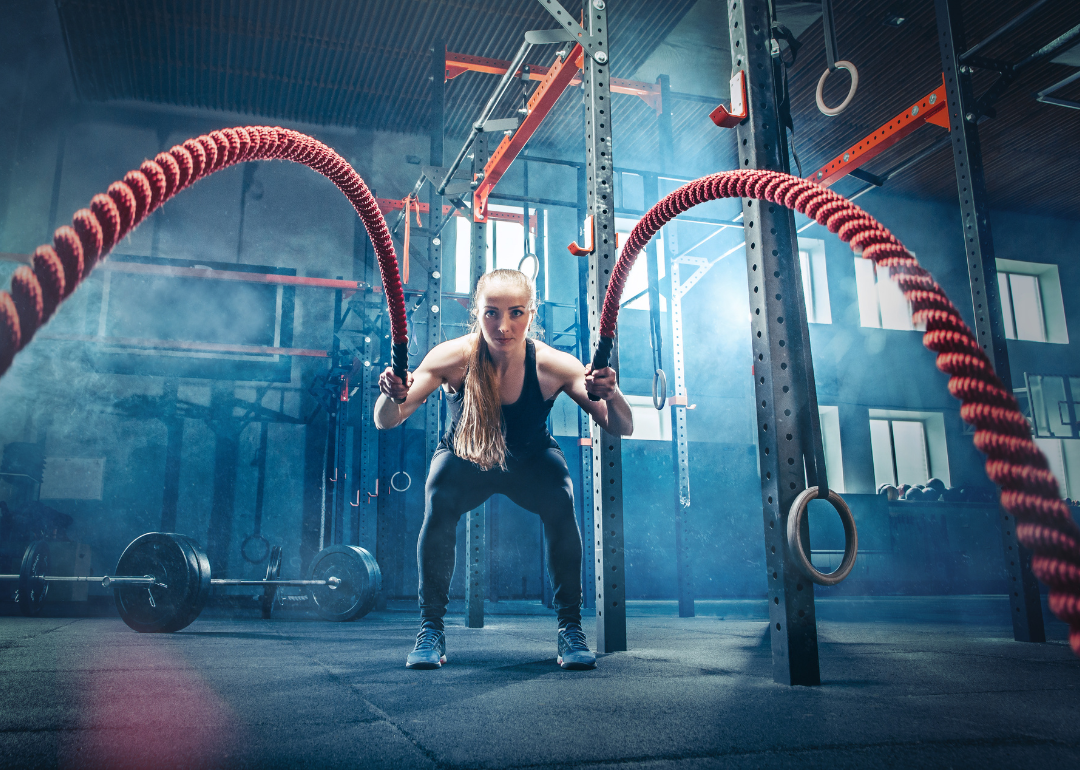
Why pairing HIIT with strength training delivers the quickest, science-backed gains
A better understanding of what happens to our bodies when we get fitter can unlock ways to speed up the journey – and it might be simpler than you think
If your goal is to get fitter and stronger in the shortest possible time, recent exercise science points to a simple strategy: push harder than your usual routine and combine high‑intensity interval training (HIIT) with regular full‑body strength work. Research shows the body adapts fast — sometimes within days — and the smartest programs exploit those early windows to accelerate gains in both aerobic capacity and muscular strength.
Why gains can be surprisingly quick
When you increase the workload your body is used to, it responds rapidly on several fronts. Within 24 hours of new cardio effort the volume of circulating blood rises (largely through fluid shifts), improving oxygen delivery to working muscles. Over the following weeks, the body continues to remodel: mitochondria — the tiny powerhouses inside cells — multiply and become more efficient, and networks of capillaries expand around muscle fibers, both of which help you use more oxygen during exercise.
Measures of aerobic fitness such as VO2 max generally begin to climb noticeably after about six to eight weeks of consistent training and can show meaningful improvement by three months. For strength, novices often get rapidly stronger in the first few weeks because the nervous system learns to activate muscles more effectively; real increases in muscle size typically follow over the next two to three months as micro‑damage from resistance work is rebuilt into larger, more capable muscle.
How HIIT accelerates aerobic gains
High‑intensity interval training — short bursts of near‑maximum effort followed by brief recovery — is a time‑efficient way to provoke big aerobic adaptations. Landmark interval protocols (for example, repeated 20‑second all‑out efforts with short rests) were shown to improve aerobic capacity more quickly than longer, moderate‑intensity sessions in some studies. Even a handful of HIIT sessions across two weeks can lift VO2 max and endurance capacity, provided the intense intervals are genuinely hard.
Why adding strength training matters (and why together is better)
HIIT taxes the heart, lungs and metabolic machinery; strength training stresses the muscles and nervous system. Together they create complementary signals for adaptation:
Strength sessions build force production and structural resilience, making you more powerful and less injury‑prone.
Resistance work enhances the muscle’s capacity to handle repeated high‑power efforts, which supports better performance during HIIT.
Combining modalities helps you develop both speed-endurance and raw strength, delivering faster visible and functional results than either approach alone.
Put simply:
HIIT improves how well your body uses oxygen and produces energy quickly; strength training teaches your muscles to apply that energy into force. When timed thoughtfully, they compound one another.
Beginners can start with 2 HIIT sessions and 2 strength sessions per week, progressing frequency and intensity as fitness improves. Researchers and coaches commonly recommend starting conservatively with HIIT and allowing 48 hours between intense sessions while your body adapts.
Safety, recovery and individual differences
Expect variation. Genetics, age and prior training influence how quickly VO2 max and muscle size change. Younger or previously active people often progress faster. Recovery — sleep, nutrition and gradual progression — is essential: HIIT and heavy strength both impose substantial stress and need proper rest to turn stress into durable gains.
Also, the “best” program is the one you actually do consistently. If HIIT or resistance work feels unsustainable or causes pain, modify intensity, reduce frequency, or substitute alternatives you’ll stick with.
Takeaways — why this combo works best for speed
Early physiological changes (blood volume, mitochondrial efficiency, capillary growth, neural adaptation) mean you can see measurable improvement in weeks, not months.
HIIT delivers rapid aerobic adaptations with minimal time investment.
Strength training builds the muscular foundation that lets you generate force and stay resilient.
Used together, HIIT and resistance work provide the fastest route to being both fitter and stronger.
Acknowledgement
This article synthesises scientific reporting and expert commentary from Grace Wade’s piece “The remarkable science‑backed ways to get fit as fast as possible” (The Guardian, 22 July 2024; updated 10 July 2025), together with translation into a practical training framework emphasizing the combination of HIIT and strength training.
Graham holds a first-class honours degree in biochemistry and an MSc in science communication, both from Imperial College London